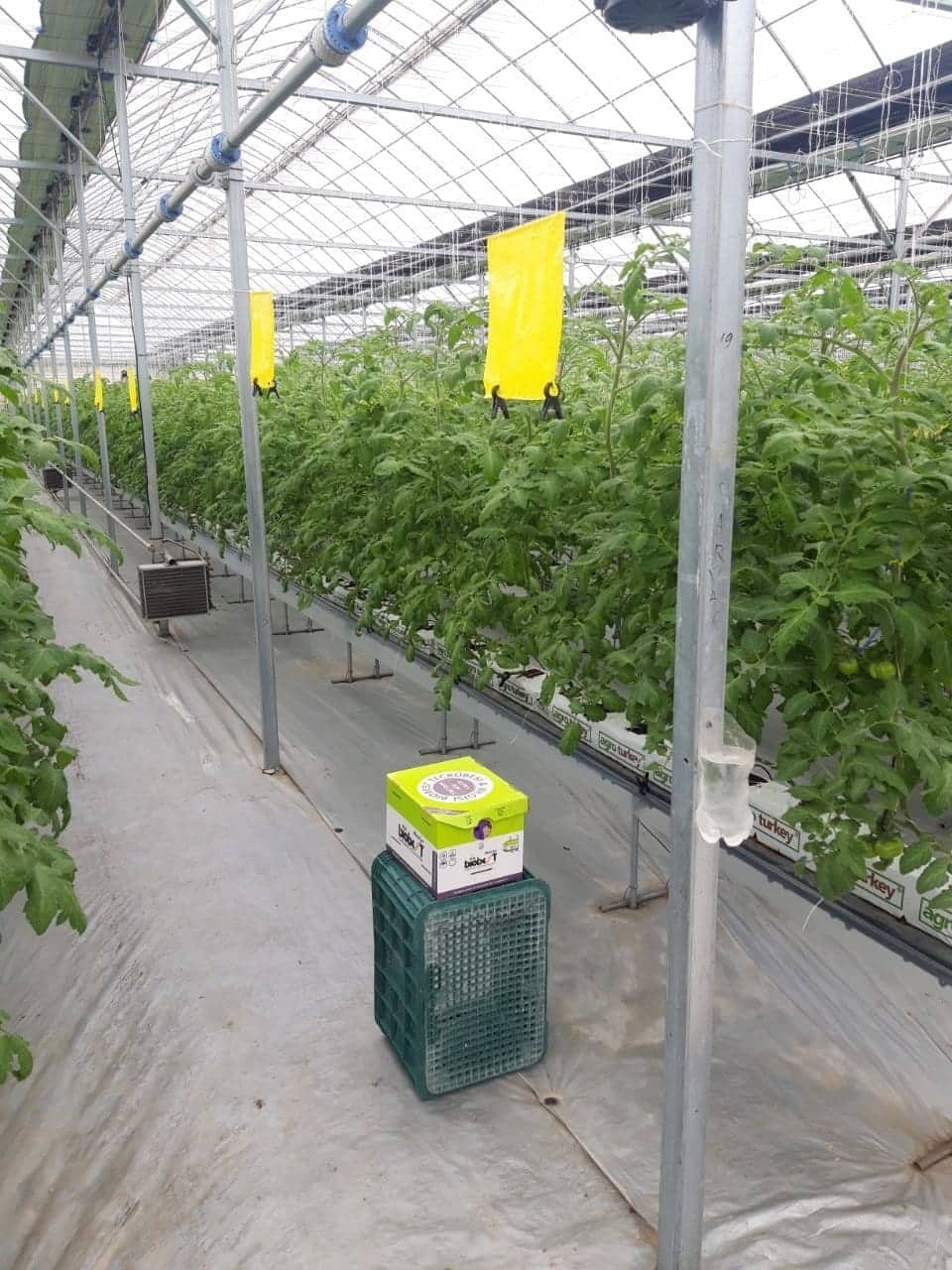
Standard Bumblebee Hive
BioBest Pollination:
The standard hive is the perfect product for general applications and crops with between 25-35 blossoming flowers per m² per week - such as round and plum tomatoes, and growing surfaces greater than 2000 m². The visibility has been optimized on the boxes so fewer bumblebees get lost in the greenhouse. This results in better pollination. After their release, worker bumblebees start pollinating the crop. They are supported by more workers born in the weeks after their introduction.
- الفئة
- Organic
- النوع
- High-tech Greenhouse
- الشركة المصنّعة
- Biobest
- المحاصيل
- طماطم, فلفل, باذنجان, كوسا, فراولة, كرز, زهور
- الزراعة
- دفيئة, حقل مفتوح
- الباركود
- 2900100028844
التوصيل
- مندوب سريع (طشقند) · مدينة طشقند فقطbugun · 35 000 UZS
- BTS — حتى الباب1–3 kun · 28 000 UZS
- مندوب EMU1–2 kun · 34 000 UZS
- الاستلام من المستودعkelishiladi · مجانًا
الوصف
Pollination of various crops such as cherry, round and beef tomatoes, peppers, and eggplant.
BioBest Pollination:
The standard hive is the perfect product for general applications and crops with between 25-35 blossoming flowers per m² per week - such as round and plum tomatoes, and growing surfaces greater than 2000 m². The visibility has been optimized on the boxes so fewer bumblebees get lost in the greenhouse. This results in better pollination. After their release, worker bumblebees start pollinating the crop. They are supported by more workers born in the weeks after their introduction.
The improved visibility of the hives among the crop is based on the way bumblebees see. Bumblebees now easily find the hive, fewer bumblebees get lost in the greenhouse and pollination improves.
- Distribute the Bumblebee hives evenly along the main path of the greenhouse;
- Place the colonies on a horizontal platform (avoid inclination, otherwise, sugar water may leak);
- During summer: position the hive about 20-60 cm above the ground on the south-side of a path to obtain maximum shade from the crop. If needed, provide additional shading.
- During winter: position the hive near the top of plants on the north side of the main path. Ensure that the hive is exposed to the first daylight.
- Wait at least 15 minutes after positioning the hives before opening the hive entrance, this allows the bumblebee colonies to calm down.
BioBest Standard Hive:
Biobest Standard Hive is mainly used in crops grown on an area smaller than 1000 m² or in crops with less than 25 blossoming flowers per m² per week, such as beef tomatoes or seed crops, for example. This hive consists of a standard-sized colony of the bumblebee species "Bombus Terrestris". At delivery, it contains more than 80 workers. Its pollination activity lasts 6 to 8 weeks. BioBest bumblebees perform best at ambient temperatures of between 10-30°C.
Standard hives are equipped with:
- an extendable ventilation system
- a care-free nutrition system with a Biogluc bottle of 2.1kg
- an optional pollen tray
Packaging:
One hive with one colony of bumblebees including a queen, workers, brood, and sugar water.
Handling:
- Every hive contains food in order to keep the bumblebees in good condition during transport and storage.
- To guarantee the best pollination results, start using the hive on the day of arrival.
- Start using the hive no later than one day after arrival.
- Maintain the bumblebees at a temperature of between 15 – 25°C.
- Avoid direct sunlight on the hive.
Special points of attention:
- Make sure the hives and the entrances are well visible, so the bumblebees easily find their way home.
- Place no more than two hives next to or close to each other. To reduce drift of bumblebees, make sure each hive entrance points in a different direction.
- Please note that direct sunlight on the hive can increase the internal hive temperature with 5-15°C. It is important to provide shade in warm conditions.
- Make sure ants cannot reach the sugar water of the hive by making a barrier of grease or insect glue. Also avoid contact between plants and the hive, so that ants cannot reach the hive.
- Avoid colonies to be placed in the direct surrounding of the CO2 supply, or in other locations where CO2 can reach high levels (over 2500 ppm).